

Research Support
MESN supports a wide range of research and data, spanning across various industries
Climate Change
Ocean Biogeochemistry
Environmental Impact Assessments

Marine Ecology
Physical Oceanography
Marine Sensing Technologies
Our Buoys
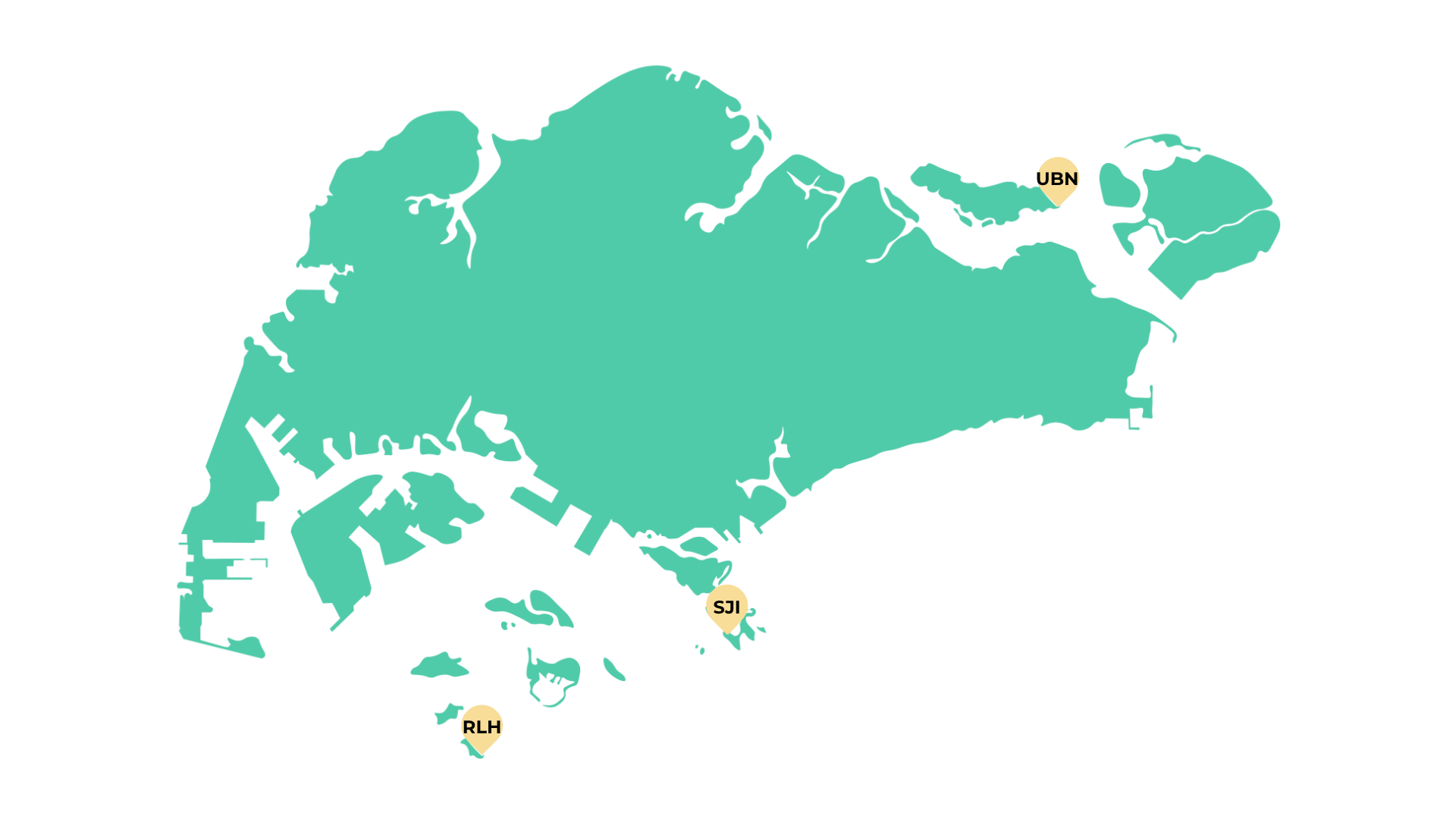
Our buoys are situated in key areas that have high ecological richness and provide good measure of the seawater flowing through Singapore.
Buoy Design
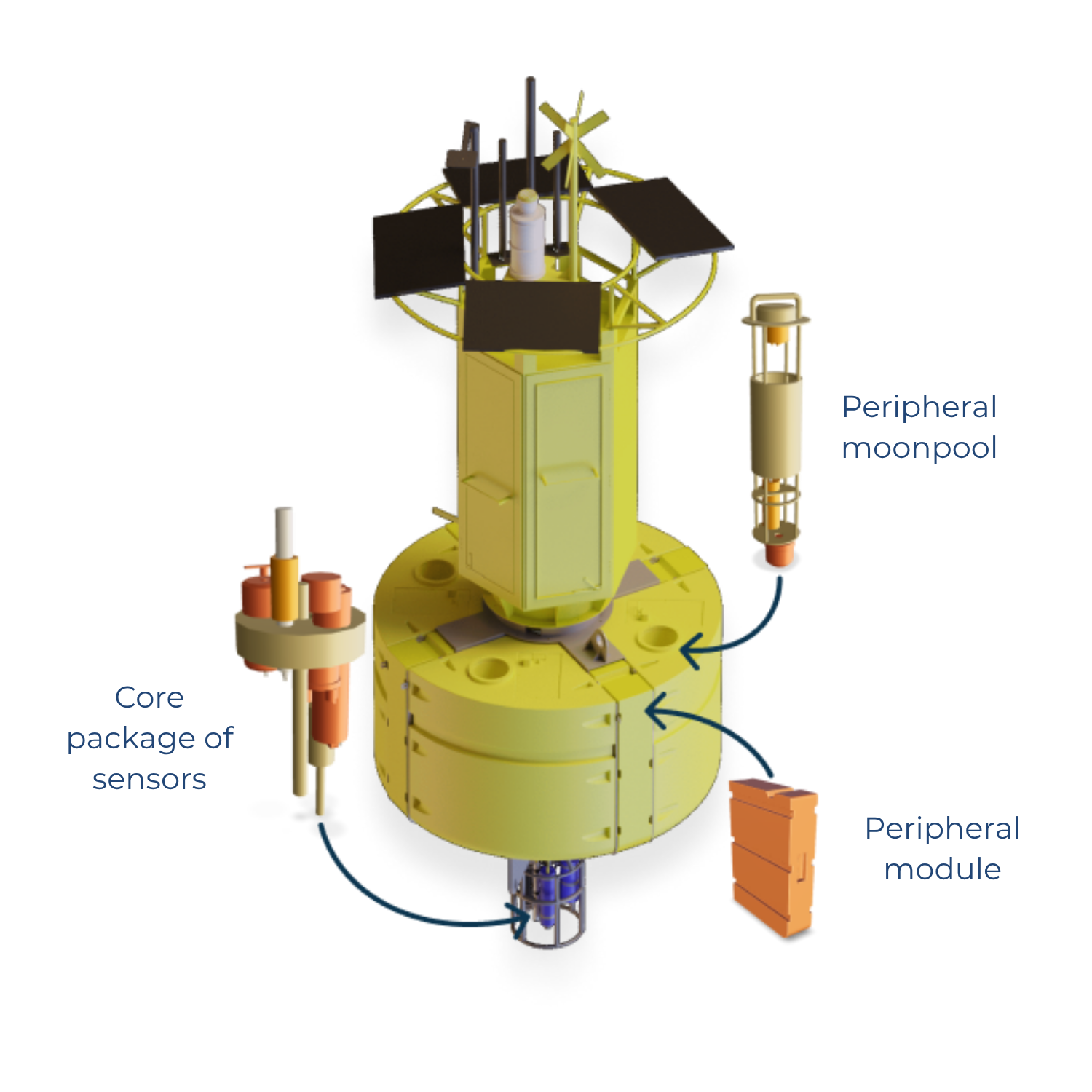
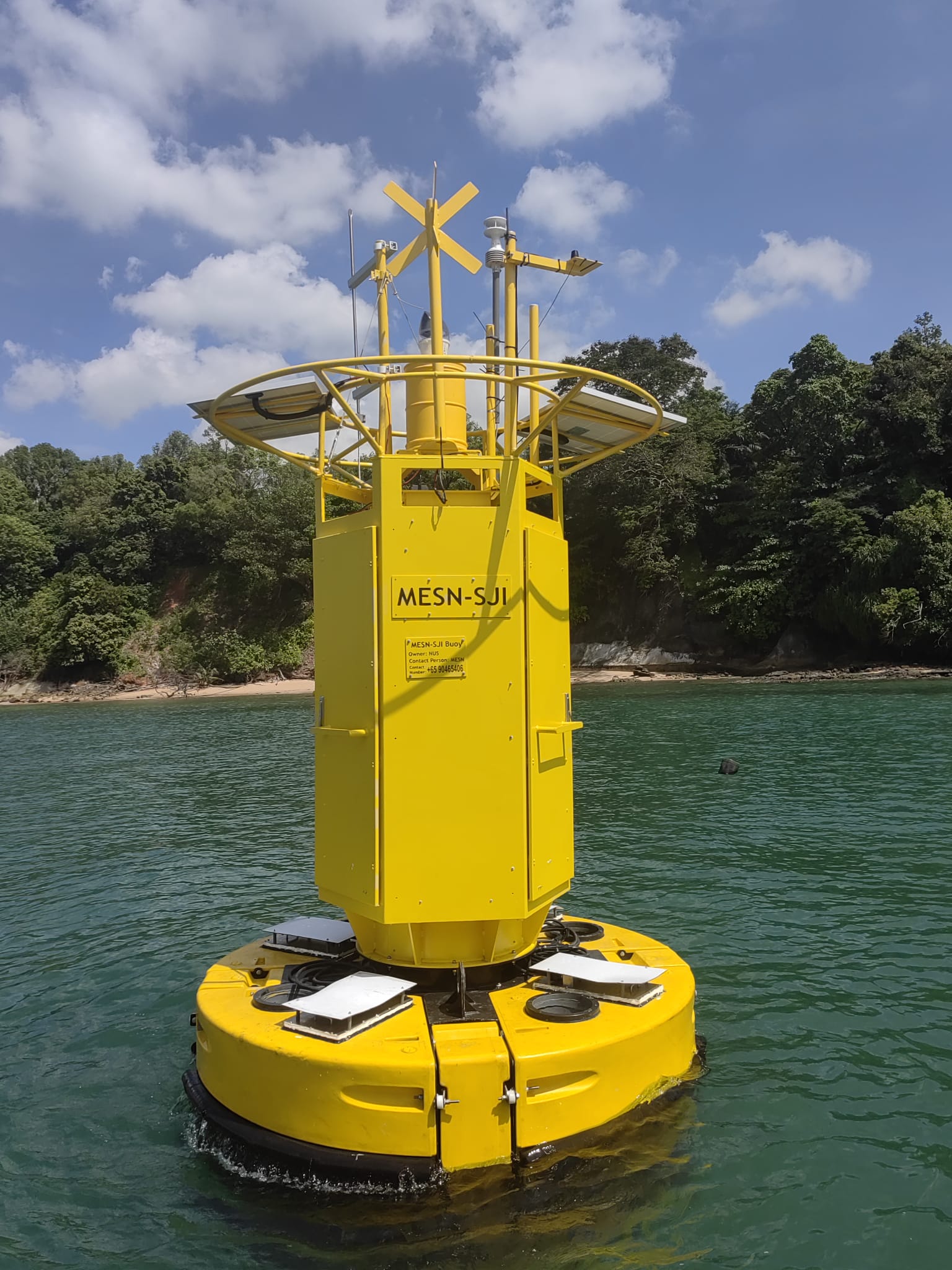
The MESN buoy is a 2.65m diameter PE buoy with a two-tiered modular design. The MESN core module houses a resident suite of sensors, and its peripheral modules and moon pools provide room for expansion, add-ons and to support test-bedding of marine technologies.
MESN employs an open architecture system with standard mechanical, electrical, and software interfaces to support integration of new sensors.
Capabilities
The MESN buoy is a state-of-the-art platform designed to advance marine research and innovation. Its resident suite of sensors collects crucial seawater parameters essential for understanding biogeochemical and oceanographic processes, with many datasets available in real-time for registered users. The buoy’s modular design allows for seamless collaboration, enabling the integration of new sensors and technologies for testing and development.
Powered by a low-energy edge processing and analytics platform, the MESN buoy ensures efficient power management, data processing, and predictive maintenance. Its agent-based architecture, combined with edge and fog processing capabilities, supports scalability and plug-and-play compatibility with third-party devices using standard protocols. MESN invites researchers and industry leaders to collaborate and explore its potential for advancing marine technology.
24/7 Realtime monitoring

Supports test-bedding of new technologies

Supports test-bedding of new technologies
Parameters and Sensors
Please note that fees may apply for access to some parameters. Refer to page 21 of the NMRS Researcher Handbook for latest parameter availability and access.
Learn more about accessing data, contributing data, and collaborating with MESN here.



Ombak Web Data Portal
Ombak
(Malay for "wave")
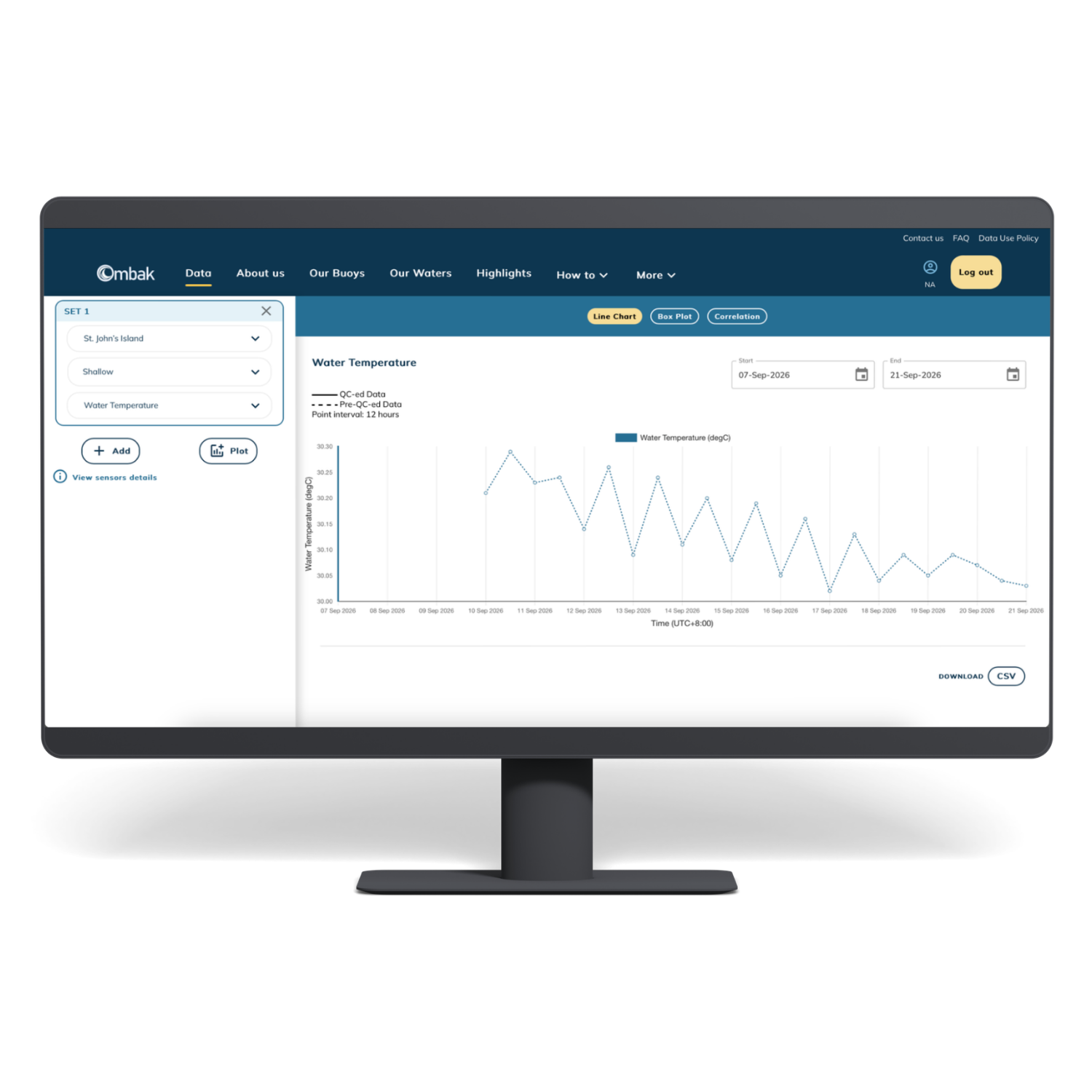
Ombak is the database and web portal for the Marine Environment Sensing Network. It features a user-friendly interface for near real-time viewing, analytics and visualization tools
Additional Resources
Learn to make the most of Ombak - click to find out more about accessing data, contributing data, and collaborating with MESN projects.
Find a comprehensive collection of scientific publications related to the Marine Environment Sensing Network and Singapore's marine environment.
Explore the growing web of ocean observatories that deliver data to assess the state of our oceans and address scientific questions regarding our marine environment.
